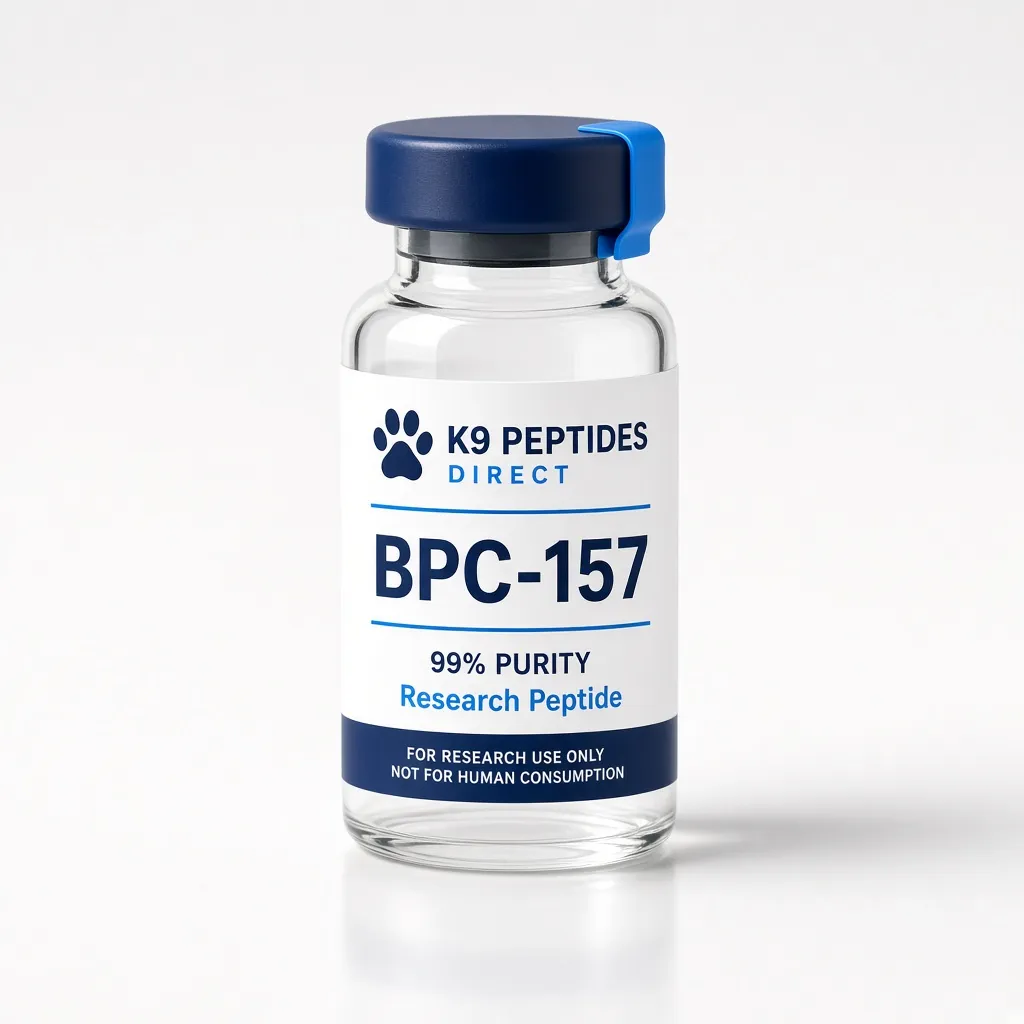
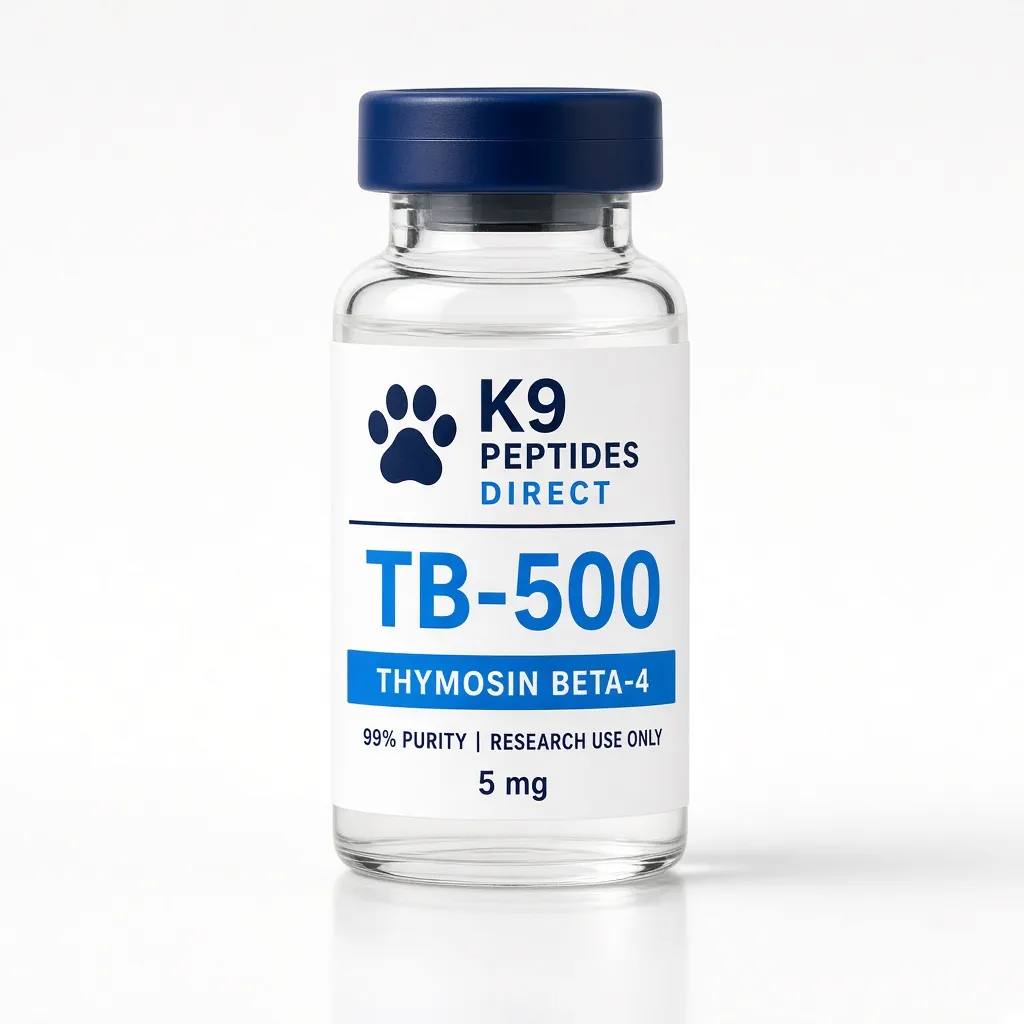
BPC-157 and TB-500 are the two names most dog owners meet first. The papers behind those names are real. So are the limits. This article summarizes what indexed studies and reviews actually report, and what they do not.
If you need the chemistry first, start with what peptides are. Catalog pages for BPC-157 and TB-500 are listings for research and veterinary-guided use, not evaluated drugs.
BPC-157 is a 15-amino-acid fragment studied mainly in rats
Chang and colleagues described BPC 157 as a pentadecapeptide — 15 amino acids — and a partial sequence of a body-protection compound isolated from human gastric juice. In a 2011 Journal of Applied Physiology paper, they used tendon fibroblasts from rat Achilles tendon. They reported that BPC 157 accelerated outgrowth from tendon explants, improved cell survival under hydrogen-peroxide stress, and increased in-vitro migration. In that study, MTT assays did not show a direct increase in fibroblast proliferation. The authors associated the migration and spreading findings with FAK and paxillin phosphorylation.
That is a mechanism paper in rat cells and explants. It is not a clinical trial in dogs with tendon injury. It does not identify a canine dose, a route that owners should copy, or a recovery timeline.
A later 2014 Molecules paper, also from Chang’s group and available on PMC, again used Achilles-tendon fibroblasts from male Sprague-Dawley rats. Microarray work flagged growth-hormone receptor as an up-regulated gene. The authors reported dose- and time-dependent increases in receptor mRNA and protein. Adding growth hormone after BPC 157 exposure increased viable-cell counts and PCNA expression, and JAK2 was activated. Their conclusion was cautious and mechanistic: increased receptor expression *may* potentiate growth-hormone signaling in those fibroblasts.
Read together, the two papers support a narrow claim: in rat tendon-fibroblast systems, BPC 157 has been associated with migration, stress survival, and growth-hormone-receptor expression. They do not support a claim that BPC-157 diagnoses, treats, cures, or prevents musculoskeletal disease in dogs.
Gastric and “organoprotection” reviews are still preclinical syntheses
A 2011 review by Sikiric and colleagues in *Current Pharmaceutical Design* surveys gastrointestinal models. The review describes BPC 157 as stable in human gastric juice and discusses rodent work on esophagus, stomach, intestine, liver, and pancreas lesions, plus fistula and anastomosis models. The authors also mention inflammatory-bowel-disease clinical-trial experience. That mention is the authors’ characterization of the program they review. It is not the same as an FDA finding of safety or effectiveness, and it is not canine data.
A 2020 *Gut and Liver* review (PMC7096228) places BPC 157 in Robert’s cytoprotection and Selye’s stress-coping language. The abstract reviews gastric-cell protection against noxious agents, discussion of alcohol and NSAID models, and broader “organoprotection” language spanning several tissues. The paper is a narrative review from a group that has published extensively on the peptide. Reviews can organize a literature. They cannot replace controlled canine trials that have not been presented as the basis for an approved animal drug.
The honest sentence for a dog owner is therefore short. Most BPC-157 studies are in rodents or in cultured rodent cells. Catalog copy that jumps from those papers to a promised recovery in a sport dog is marketing, not a reading of the methods sections.
TB-500 is not interchangeable with native thymosin β4
“TB-500” is a research-trade name commonly used for a synthetic fragment related to thymosin β4 (Tβ4). Native Tβ4 is a 43-amino-acid, naturally occurring peptide. The published regenerative literature is largely about Tβ4, not necessarily about every fragment sold under a catalog nickname. Treat them as related, not identical.
Goldstein, Hannappel, Sosne, and Kleinman (2012) reviewed Tβ4 as a low-molecular-weight peptide involved in repair biology. They describe actin binding, cell migration, and interest in skin, eye, heart, and central-nervous-system models. Their expert-opinion section discusses scientific foundations for clinical trials. That is a review of Tβ4 biology, not a canine TB-500 protocol.
An earlier 2005 *Trends in Molecular Medicine* review by Goldstein, Hannappel, and Kleinman focuses on Tβ4 as the major actin-sequestering molecule in eukaryotic cells and on dermal and corneal wound-healing research. Again, the species and models in that literature are not aging companion dogs.
Treadwell and colleagues (2012) summarized dermal-healing work: full-thickness punch wounds in rats and mice, including steroid-treated, diabetic, and aged mice, plus mention of phase 2 work in human stasis and pressure ulcers. Those are human dermatology and rodent skin models. They do not establish that a research vial labeled TB-500 will change mobility, tendon integrity, or coat condition in a dog.
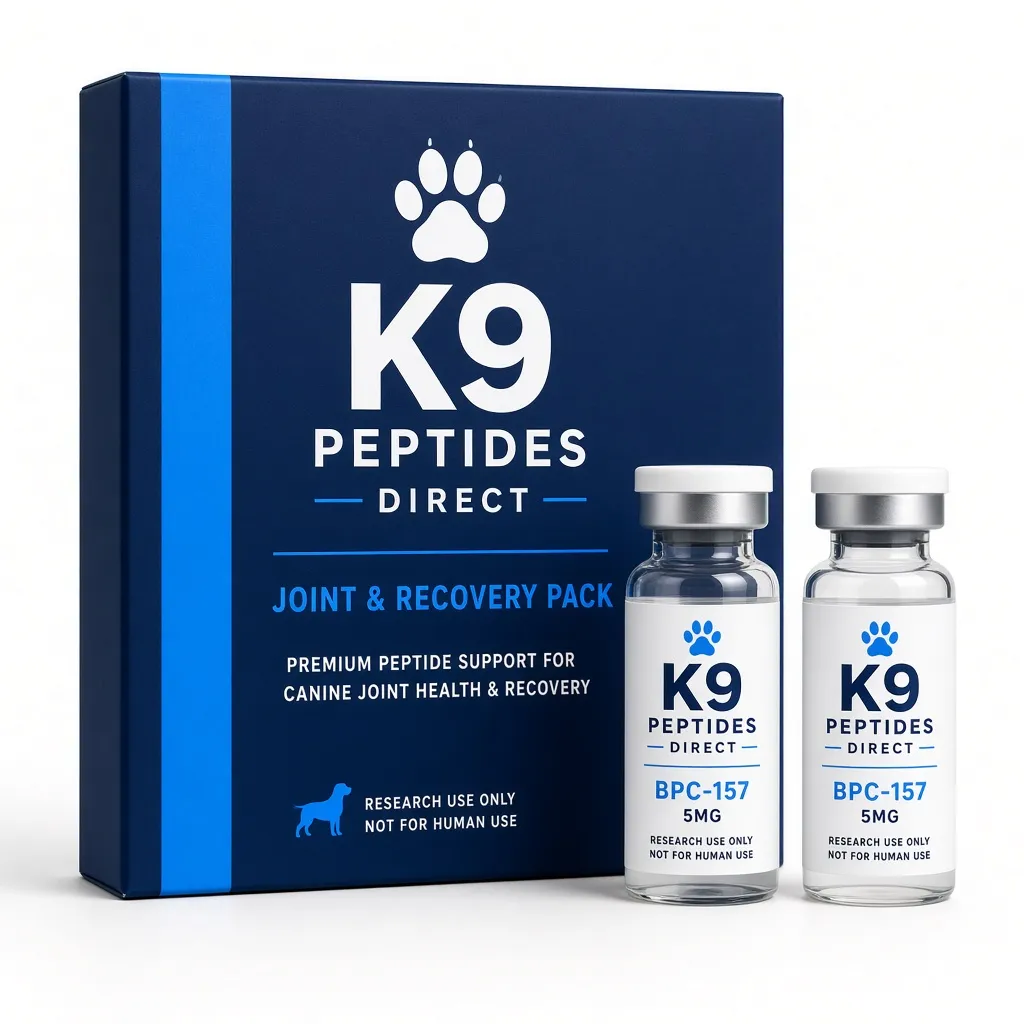
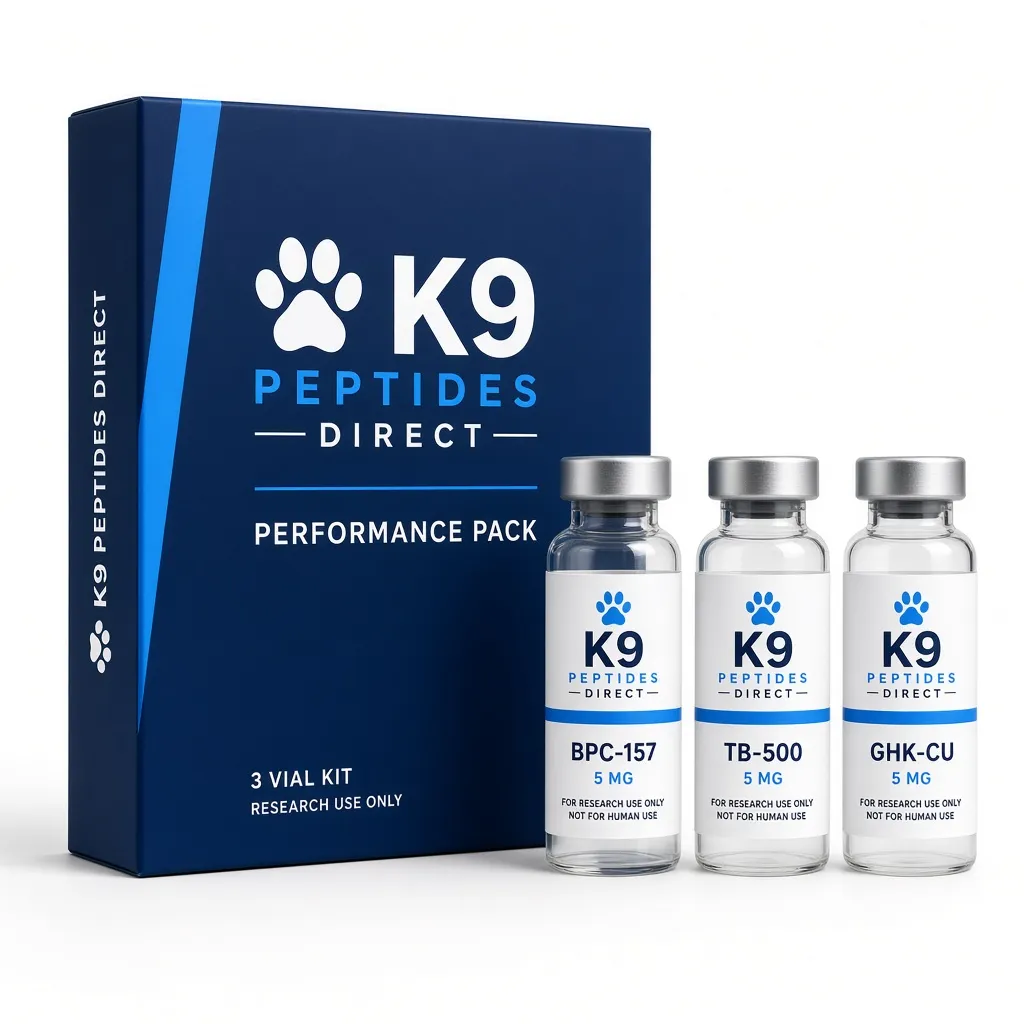
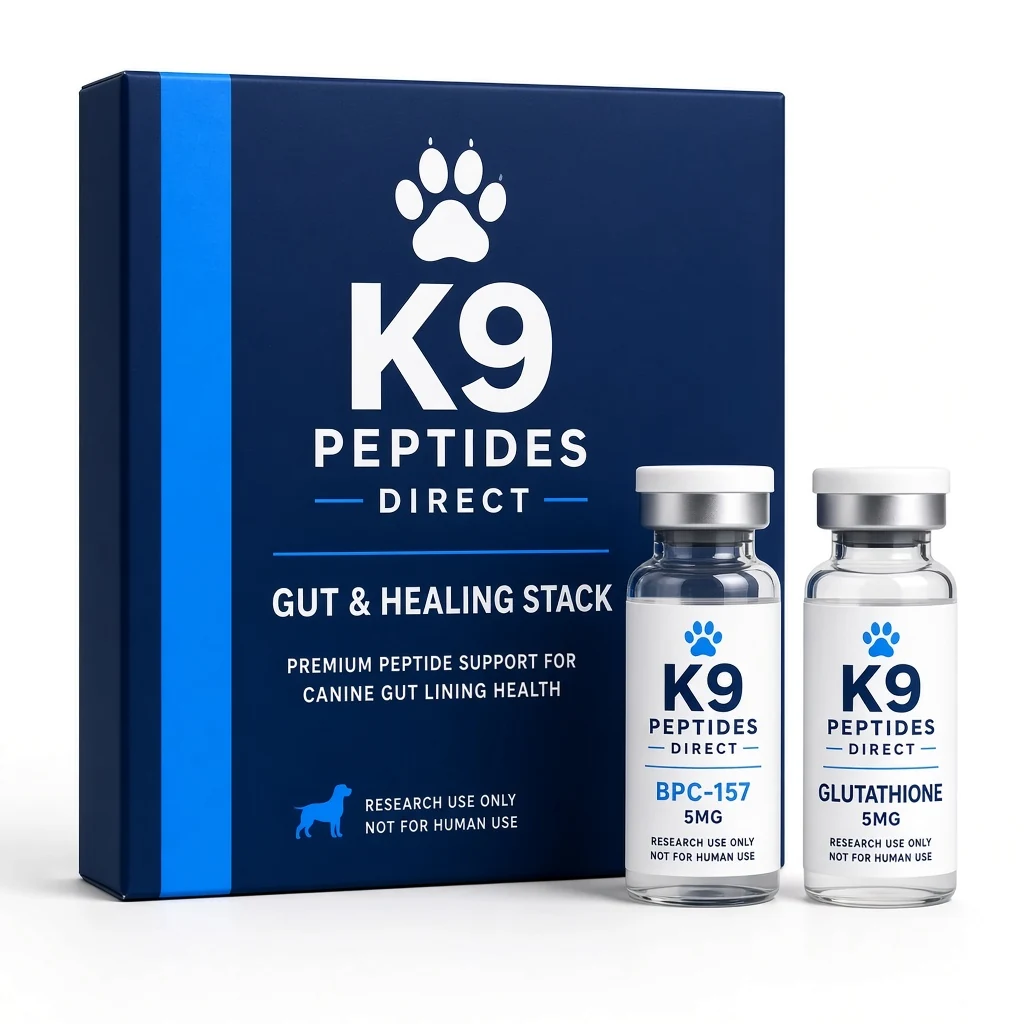
When a storefront pairs BPC-157 with TB-500 in a Joint & Recovery Pack or a K9 Performance Pack, the pairing is a catalog convenience. It is not evidence that the combination has been evaluated as a drug. The Gut & Healing Stack likewise groups BPC-157 with glutathione for research questions, not as an approved gastrointestinal therapy.
What the papers do not give you
- A validated canine dose, frequency, or cycle length.
- Head-to-head data against standard veterinary care for tendon, joint, or gut disease.
- FDA approval, conditional approval, or indexing as an animal drug. See FDA’s unapproved-animal-drug page.
- A reason to skip examination, imaging, or pain assessment that a veterinarian would otherwise perform.
Extra-label use applies to approved drugs under a valid VCPR. It is not a blanket permission structure for unapproved research peptides.
How to use this literature without over-reading it
If you discuss these names with a veterinarian, bring the citations, not a forum summary. Ask whether any canine data exist for the exact sequence in the vial, not only for a related human peptide. Ask how the clinic would monitor for problems that the rodent papers never measured in dogs.
Quality paperwork still matters even when clinical claims are off the table. How to read a COA explains identity and purity tests. Storage and reconstitution covers handling limits that apply after a vial exists. The research guide remains an educational chart, not a substitute for the veterinarian who has examined the dog.
The research says BPC-157 has been studied in rat tendon-cell systems and extensively reviewed in rodent gastrointestinal models. It says thymosin β4 is an actin-binding peptide with a broader regenerative literature, mostly not in dogs, and not automatically equal to a TB-500 fragment. That is a fair reading. Anything louder is not what the papers actually say.
References
- BPC 157 and tendon outgrowth, survival, and migration (Chang et al., 2011) — PubMed / Journal of Applied Physiology
- BPC 157 and growth-hormone receptor expression in tendon fibroblasts (Chang et al., 2014) — PMC / Molecules
- Stable gastric pentadecapeptide BPC 157 in the gastrointestinal tract (Sikiric et al., 2011) — PubMed / Current Pharmaceutical Design
- BPC 157, cytoprotection, and organoprotection review (Sikiric et al., 2020) — PMC / Gut and Liver
- Thymosin β4: a multi-functional regenerative peptide (Goldstein et al., 2012) — PubMed / Expert Opinion on Biological Therapy
- Thymosin β4 as an actin-sequestering protein (Goldstein et al., 2005) — PubMed / Trends in Molecular Medicine
- Thymosin β4 and dermal healing in animal models and patients (Treadwell et al., 2012) — PubMed / Annals of the New York Academy of Sciences
- Unapproved animal drugs — FDA Center for Veterinary Medicine