If you have started reading about canine peptides, the vocabulary can feel like a second language. This guide stays with the chemistry and the regulatory frame. It is not a protocol, a dose chart, or a promise that any compound will change how a dog feels, moves, or ages.
What a peptide actually is
The National Institute of General Medical Sciences describes a peptide as a molecule made of a chain of amino acids — a small protein fragment. An amino acid is a chemical building block. A protein is a larger amino-acid molecule that folds into a defined three-dimensional shape.
The NCBI MeSH record for peptides is more technical and useful. It defines peptides as amino acids joined by peptide bonds into linear, branched, or cyclic structures. In that vocabulary, oligopeptides are roughly 2–12 amino acids. Polypeptides are roughly 13 or more. Proteins are treated as larger versions that can fold into enzymes, receptors, and other complex structures.
Molecular Biology of the Cell, hosted on the NCBI Bookshelf, treats a polypeptide as a linear polymer of amino acids and notes that large polypeptides and proteins are often discussed interchangeably. The same glossary defines an amino acid as an organic molecule with both an amino group and a carboxyl group.
Those definitions matter because storefront language often compresses them. A 15-residue research peptide is not interchangeable with a dietary protein, a vitamin, or a licensed veterinary drug. Length, sequence, folding, purity, and intended use all change what the molecule is.
Why researchers study short chains
Cells already use peptides as signals, fragments of larger proteins, and pieces of antioxidant or metabolic pathways. That biological familiarity is one reason laboratories study synthetic copies or fragments. It is not evidence that a purchased vial will reproduce a paper’s result in a pet.
Most published peptide work is done in cell culture or in rodents. A rat Achilles-tendon explant and a 60-pound working dog are different systems. Route, dose, formulation, and species all change what a study can support. When a paper reports an effect, the honest reading is: *in that model, under those conditions*. It is not a canine outcome guarantee.
If you want a closer look at two names that appear constantly in this category, read BPC-157 and TB-500: what the research actually says. That article stays with rodent, explant, and review literature and states the limits in plain terms.
Peptides you will see in a canine research catalog
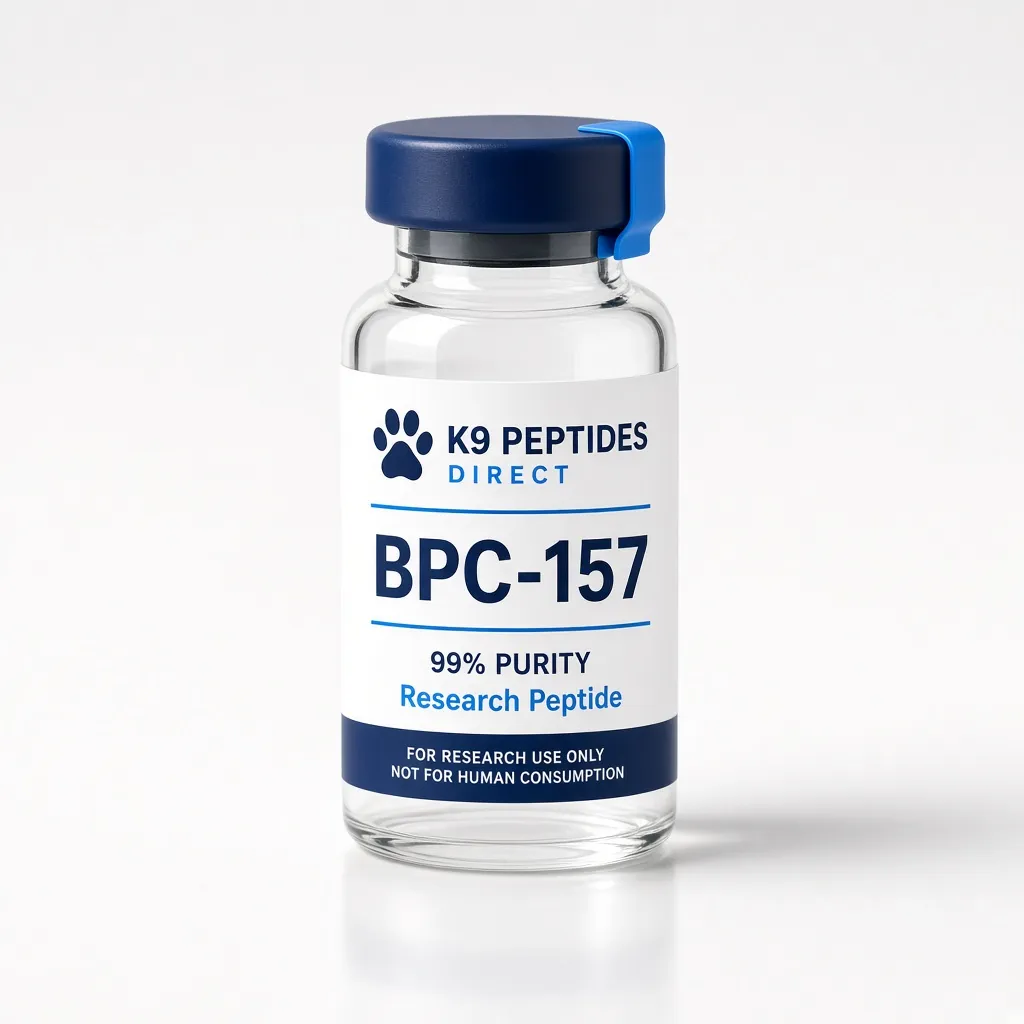
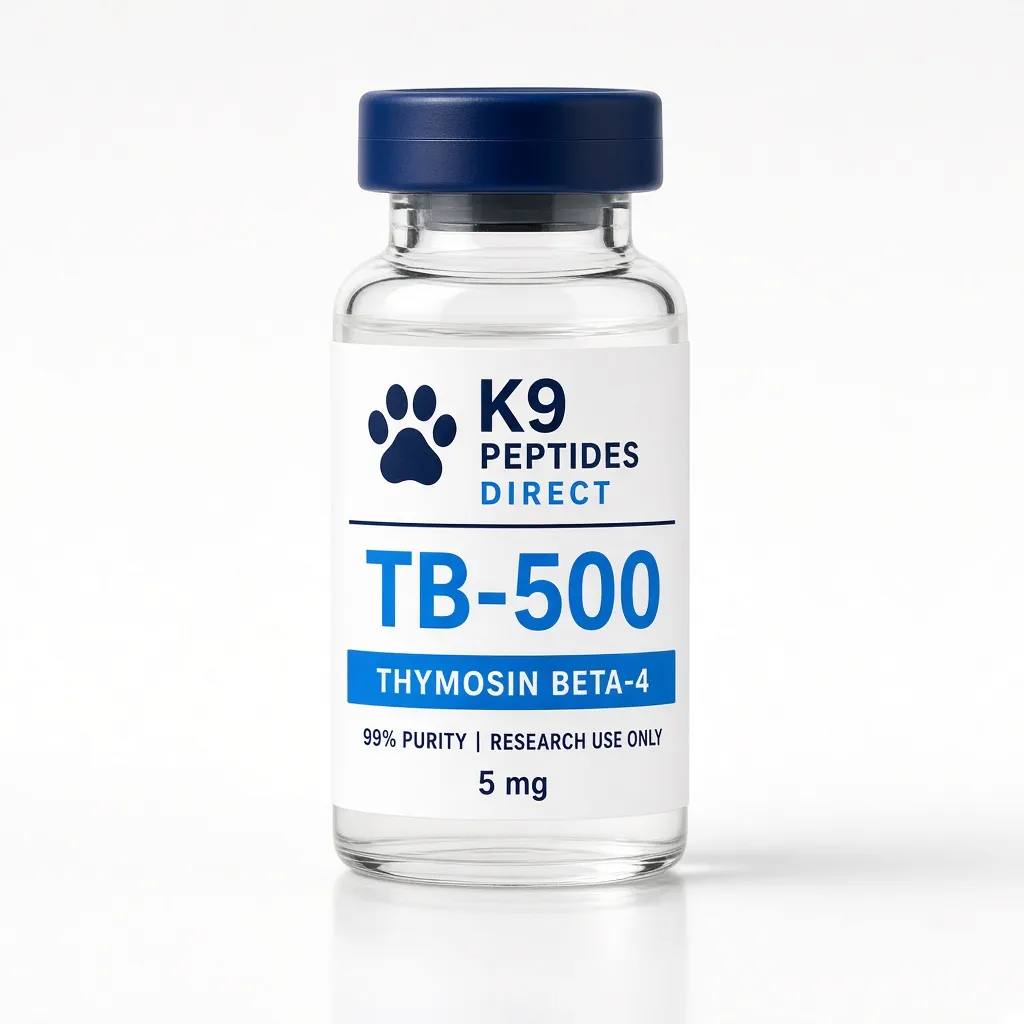
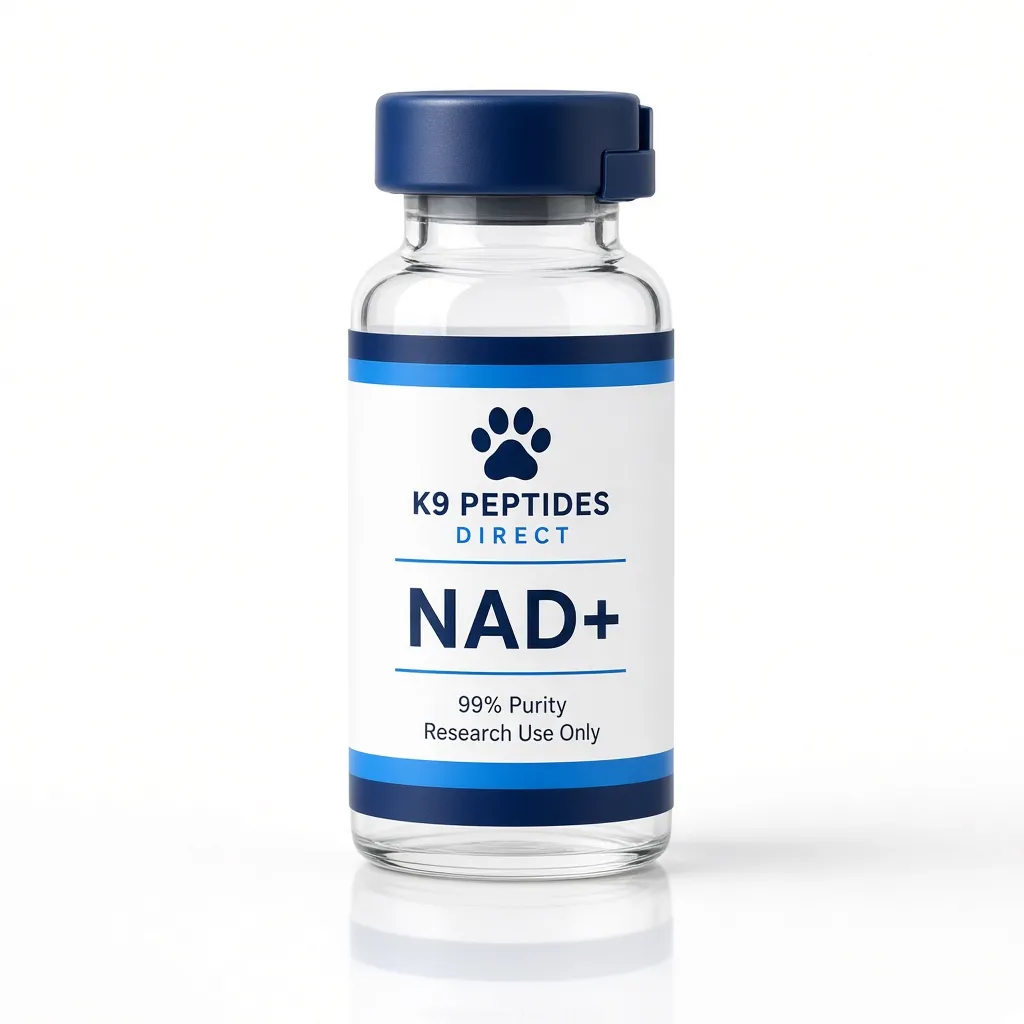
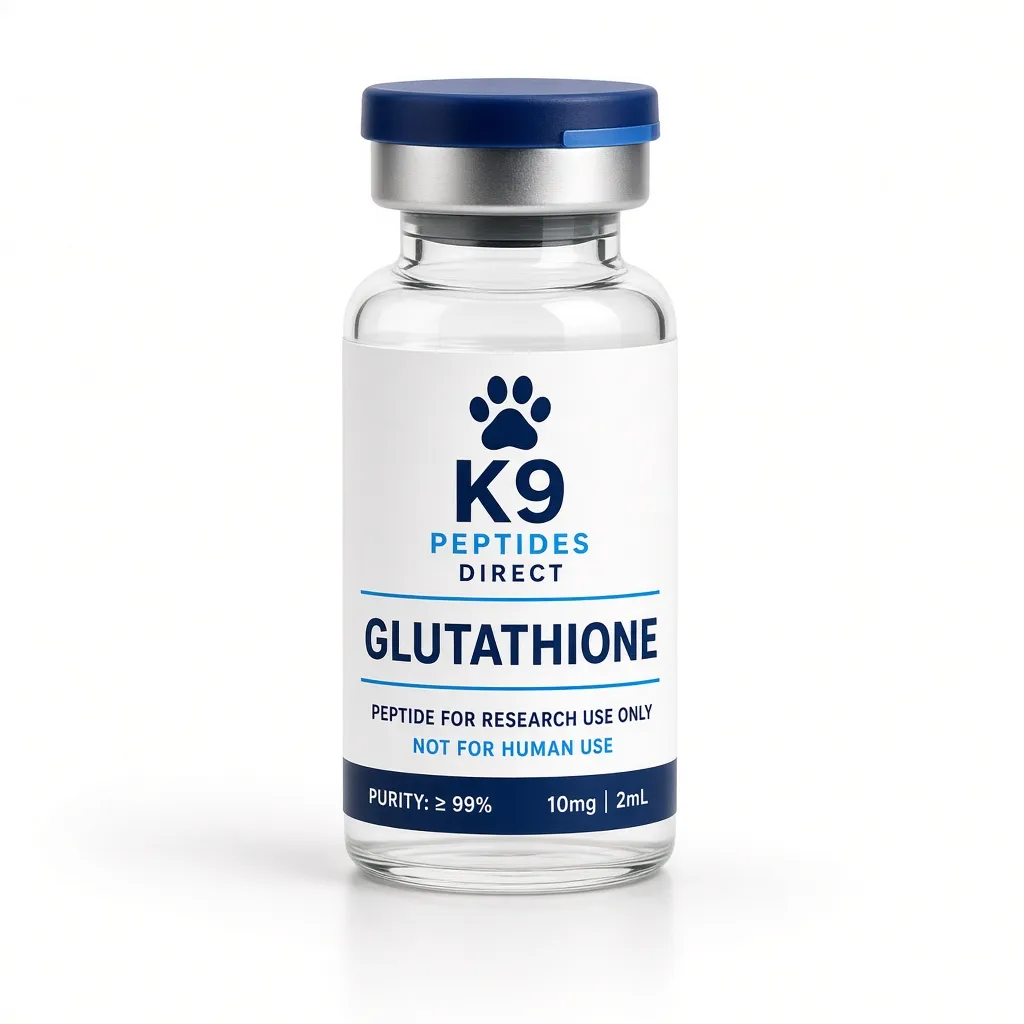
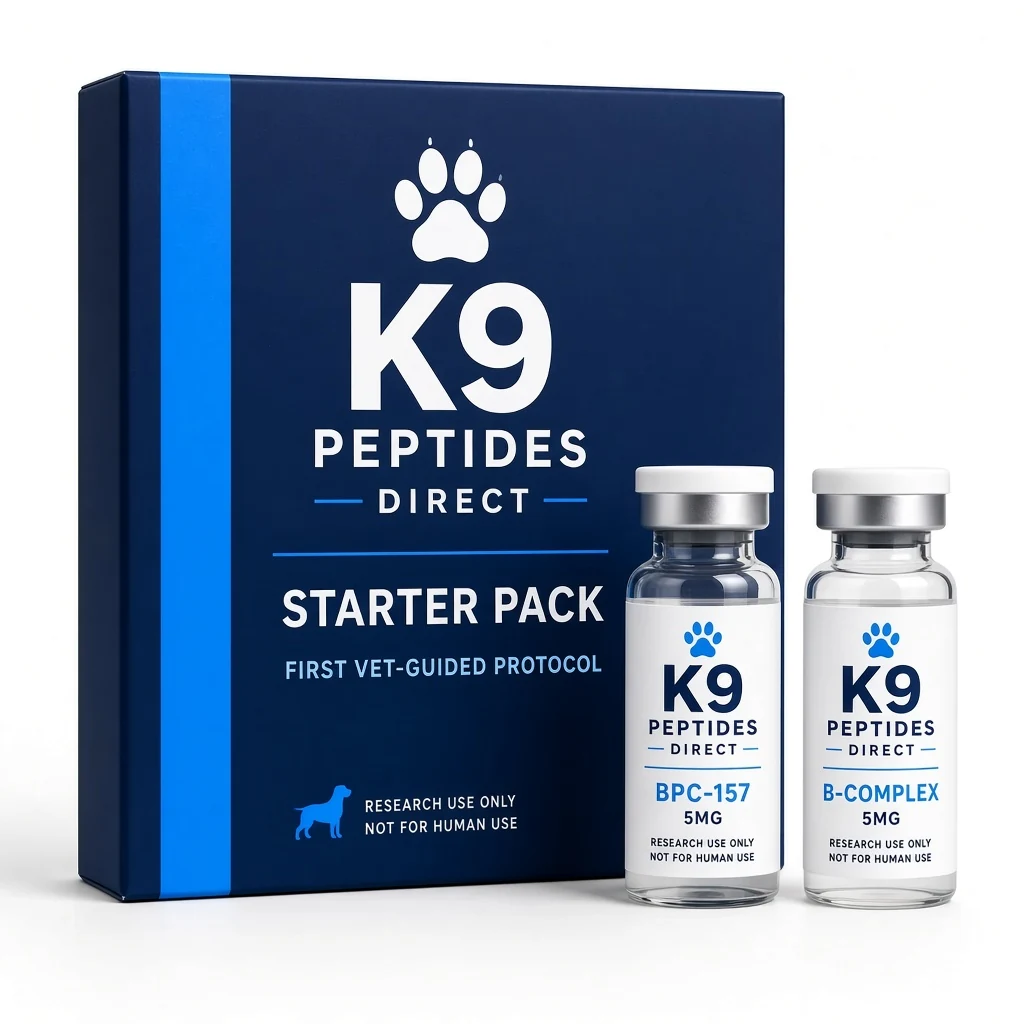
A typical research catalog groups short chains by the questions people ask, not by approved veterinary indications. On this site those groups include recovery-oriented vials such as BPC-157 and TB-500, cellular-energy research material such as NAD+, and antioxidant research material such as glutathione. Bundles such as the Starter Pack simply combine vials; they do not create a licensed combination product.
None of those listings is an FDA-evaluated animal drug. The FDA Center for Veterinary Medicine explains that an unapproved animal drug is a product intended for animals that meets the statutory definition of a new animal drug but has not been approved, conditionally approved, or indexed. The agency states that unapproved animal drugs may not meet its standards for safety and effectiveness and may not be properly manufactured, labeled, or packaged.
That CVM page is the right frame for a research storefront. A certificate of analysis can describe what is in a vial. It cannot convert an unapproved research material into an evaluated drug. How to read a certificate of analysis walks through identity, purity, and the questions a COA does not answer.
Extra-label use is not a DIY workaround
Dog owners sometimes hear that a veterinarian can use a human drug “off label.” That phrase has a legal meaning. The FDA’s extra-label use resource explains that the Animal Medicinal Drug Use Clarification Act allows veterinarians, under defined conditions, to use approved human or animal drugs in a way that is not on the label.
Extra-label use is limited. FDA states that it applies when an animal’s health is threatened or the animal may suffer or die without treatment, and generally when no approved new animal drug is labeled for the needed use. It is not a production or convenience pathway. It also applies to approved drugs. It does not turn an unapproved research peptide into a lawful extra-label prescription by default.
A second condition is a valid veterinarian-client-patient relationship. FDA’s VCPR page cites 21 CFR 530.3(i): the veterinarian has assumed responsibility for medical judgments, has sufficient knowledge of the animal for at least a preliminary diagnosis, and is available for follow-up. The federal definition requires that the veterinarian has recently seen and is personally acquainted with the animal’s care through examination or timely visits to the premises. FDA states that a federal VCPR cannot be established solely through telemedicine.
The AVMA policy on prescription drugs is consistent with that frame. Veterinary prescription drugs are to be used or prescribed only within a VCPR. Decisions should rest on clinical judgment, current information, and applicable law. That is the opposite of choosing a vial from a catalog and guessing a schedule.
How to read a catalog without treating it as medicine
A research listing can still be useful if you treat it as chemistry plus paperwork, not as a diagnosis.
- Identity. What sequence or name is claimed, and how was it checked? Mass spectrometry and HPLC are tools, not marketing adjectives.
- Purity. A percentage is a laboratory result for a method and a lot. It is not a clinical grade.
- Intended use. Research and veterinary-guided use is a limitation, not fine print to skip.
- Handling. Freeze-dried material and a reconstituted solution are different stability problems. See storage, handling, and reconstitution basics.
- Veterinary context. Weight, other medications, and concurrent disease belong to a licensed veterinarian, not a product page.
The research guide on this site is an educational reference with placeholder ranges. It is not a prescription. The FAQ covers shipping, testing, and returns in the same research-use voice.
What this does not mean for your dog
Nothing in the definitions above implies that peptides are appropriate, safe, or useful for a particular dog. NIH glossaries describe chemistry. MeSH describes classification. FDA and AVMA describe the legal and professional setting for animal drugs.
Owners who want a next step have three practical ones that stay inside that setting. First, bring the actual question to the veterinarian who already knows the dog — mobility, recovery after a procedure, senior screening, or something else — and ask what evidence exists in dogs. Second, if you are comparing research materials, read the lot paperwork rather than the nickname. Third, if you browse the shop, treat every page as a catalog entry for veterinary-guided research, not as a treatment plan.
Peptides are short amino-acid chains. That sentence is enough chemistry to start. Everything after it — species, route, lot quality, and whether a veterinarian is involved — is where the careful reading begins.
References
- NIGMS science glossary: peptide, protein, and amino acid — National Institute of General Medical Sciences (NIH)
- MeSH descriptor: Peptides (D010455) — NCBI / National Library of Medicine
- Molecular Biology of the Cell glossary: polypeptide — NCBI Bookshelf
- Molecular Biology of the Cell glossary: amino acid — NCBI Bookshelf
- Unapproved animal drugs — FDA Center for Veterinary Medicine
- The ins and outs of extra-label drug use in animals — FDA Center for Veterinary Medicine
- Veterinarian-client-patient relationships and extra-label use — FDA Center for Veterinary Medicine
- Use of prescription drugs in veterinary medicine — American Veterinary Medical Association